Tuesday, June 18, 2019

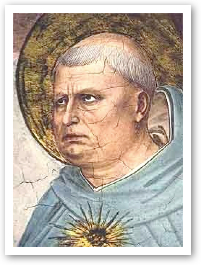
The Just War - Thomas Aquinas


The Just War


Saint Thomas Aquinas, O.P.
1225-1274

In the first place, the authority of the prince, by whose order the war is undertaken; for it does not belong to a private individual to make war, because, in order to obtain justice, he can have recourse to the judgment of his superior. Neither does it belong to a private individual to summon a multitude of people together as must be done to engage in war. But, since the care of the State is confided to Princes, it is to them that it belongs to defend the city, the kingdom or province which is subject to their authority. Just as it is permissible for them to defend these, by the material sword, against those who trouble them from within, by punishing the evil-doers according to the word of the Apostle: "The prince beareth not the sword in vain for he is the minister of God to execute His vengeance against him who doeth evil" (Romans xiii: 4), so, in like manner, it is to them that it belongs to bear the sword in combats for the defence of the State against external enemies. Also, the Psalmist says to princes: "Snatch the poor and deliver the needy out of the hands of the sinner" (Psalm lxxxi: 4). This is what makes St. Augustine say (Contra Faustum, XXII, 75): "The natural order, which would have peace amongst men, requires that the decision and power to declare war should belong to princes."


In the second place, there must be a just cause; that is to say, those attacked must have, by a fault, deserved to be attacked. This is what makes St. Augustine say in Book VI, Question 16, of Questions on Joshua: "Just wars are usually defined as those which avenge injuries, when the nation or city against which warlike action is to be directed has neglected either to punish wrongs committed by its own citizens or to restore what has been unjustly taken by it. Further, that kind of war is undoubtedly just which God Himself ordains."


In the third place, it is necessary that the intention of those who fight should be right; that is to say, that they propose to themselves a good to be effected or an evil to be avoided. This is what made St. Augustine say in the book De Verbis Domini: "With the true servants of God wars themselves are pacific, not being undertaken through cupidity or cruelty, but through the love of peace, with the object of repressing the wicked and encouraging the good." Consequently, it may happen that, although the war has been declared by the legitimate authority and for a just cause it may nevertheless be rendered illicit by the perversity of the intention of him who makes it. "For," says St. Augustine (Contra Faustum, I, XXII, Chap. 74), "what is blamed in war? Is it the death of those who must die sooner or later, but who give up their lives to bring peace by overcoming guilty men? To blame this is the cry of cowards, not of religious people. The desire for harming, the cruelty of avenging, an unruly and implacable animosity, the rage of rebellion, the lust of domination and the like-these are the things which are to be blamed in war."


To the second argument (viz. that war is a sin, as being "contrary to a divine precept") it must be replied that these precepts, as St. Augustine says (De Serm. Domini in monte, I, 34), ought always to be observed in relation to the disposition of the soul; that is to say, that man ought always to be ready, if necessary, not to resist or not to defend himself. But sometimes we must act otherwise for the common good, and even for the good of those against whom we fight. This it is that causes St. Augustine to say, in the Fifth Epistle Ad Marcellinum: "There are many things that must be done against the will of those whom one ought to correct with a beneficent severity."


To the third argument the reply is, that those who wage wars justly have peace as the object of their intention, and so they are not opposed to peace, but only to that evil peace which the Lord did not come on earth to bring (St. Matthew x: 34). Hence Augustine says (Ep. ad Bonifacium, CLXXXIX) : "For peace is not sought in order to the kindling of war, but war is waged in order that peace may be obtained. Therefore, even in waging war, cherish the spirit of the peacemaker, that, by conquering those whom you attack, you may lead them back to the advantages of peace . . . ."


To the fourth argument the reply is that manly exercises in warlike feats of arms are not all forbidden but those which are inordinate and perilous, and end in slaying or plundering. In olden times warlike exercises presented no such danger and hence they were called exercises of arms or bloodless wars.


Principles of the Just War


Principles of the Just War
  • A just war can only be waged as a last resort. All non-violent options must be exhausted before the use of force can be justified. 
  • A war is just only if it is waged by a legitimate authority. Even just causes cannot be served by actions taken by individuals or groups who do not constitute an authority sanctioned by whatever the society and outsiders to the society deem legitimate. 
  • A just war can only be fought to redress a wrong suffered. For example, self-defense against an armed attack is always considered to be a just cause (although the justice of the cause is not sufficient--see point #4). Further, a just war can only be fought with "right" intentions: the only permissible objective of a just war is to redress the injury. 
  • A war can only be just if it is fought with a reasonable chance of success. Deaths and injury incurred in a hopeless cause are not morally justifiable. 
  • The ultimate goal of a just war is to re-establish peace. More specifically, the peace established after the war must be preferable to the peace that would have prevailed if the war had not been fought. 
  • The violence used in the war must be proportional to the injury suffered. States are prohibited from using force not necessary to attain the limited objective of addressing the injury suffered. 
  • The weapons used in war must discriminate between combatants and non-combatants. Civilians are never permissible targets of war, and every effort must be taken to avoid killing civilians. The deaths of civilians are justified only if they are unavoidable victims of a deliberate attack on a military target. 


The Church's Just War Theory - Parts 1 & 2

The Church's Just War Theory - Parts 1 & 2 

  • FR. WILLIAM SAUNDERS


war.jpg
Before addressing the particular issues of germ warfare or other weapons of mass destruction, or of the embargo, we must first review "just war theory." At first hearing war seems antithetical to Christianity since the Fifth Commandment states, "Thou shalt not kill." 
However, the intent of the precept forbids the purposeful taking of human life (Catechism, #2307). Each person has a duty to preserve his life, and therefore has a right to legitimate self defense. Although an act of self-defense may have a two-fold effect — the preservation of the person's life and the unfortunate taking of the aggressor's life — the first effect is intended while the second is not. 
In preserving its own life, a state — citizens and their governments — must strive to avoid war and settle disputes peacefully and justly. Nevertheless, "governments cannot be denied the right of lawful self-defense. once all peace efforts have failed" (Vatican II, Pastoral Constitution on the Church in the Modern World, #79). Such a right does not entail a carte blanche permission for any and all acts of war. Just war theory establishes moral parameters for the declaration and waging of war. 
St. Augustine (d. 430) was the originator of the just war theory, which St. Thomas Aquinas (d. 1274) later adapted and explicated in his Summa Theologiae. St. Thomas maintained that a war may be waged justly under three conditions: First, the legitimate authority who has the duty of preserving the common good must declare the war. For instance, according to our Constitution, only Congress can legitimately declare a war. A private individual, no matter how much clout he may wield, does not have the right to commit a country to war. (Please note, we could easily get into those technical qualification of "police actions," "conflicts, " and "operations, " but to the best of my knowledge, Congress has placed restrictions on these areas.) 
Secondly, a just cause for war must exist. St. Augustine, quoted by St. Thomas, said, "A just war is apt to be described as bone that avenges wrongs, when a nation or state has to be punished, for defusing to mace amends for the wrongs inflected by its subjects, or to reborn what it has seized unjustly. 
Finally, St. Thomas said the warring party must have the right intention, "so that they intend the advancement of good or the avoidance of evil. " St. Augustine noted, "True religion looks upon as peaceful those wars that are waged not for motives of aggrandizement or cruelty, but with the object of securing peace or punishing evil-doers, and of uplifting the good. " An evil intention, such as to destroy a race or to absorb another nation, can turn a legitimately declared war waged for just cause into a wrongful act." 
Obviously, since the Middle Ages, warfare has changed dramatically, as witnessed by World War II and the conflicts which have followed it. Therefore, we can expand St. Thomas' and St. Augustine's theory to the following: In preparing to wage a just war (ius ad bellum), a country must meet the following criteria: 
(1) Just cause — The war must confront an unquestioned danger. "The damage inflicted by the aggressor or the nation or community of nations must b lasting, grave and certain, assets the Catechism (#2309). 
(2) Proper authority — The legitimate authority must declare the war and must be acting on behalf of the people. 
(3) Right Intention — The reasons for declaring the war must actually be the objectives, not a masking of ulterior motives. 
(4) Last resort — All reasonable peaceful alternatives must have been exhausted or have been deemed impractical or ineffective. The contentious parties must strive to resolve their differences peacefully before engaging in war, e.g. through negotiation, mediation, or even embargoes. Here too we see the importance of an international medial body, such as the United Nations. 
(5) Proportionality —The good that is achieved by waging war must not be outweighed by the harm. What good is it to wage war if it leaves the country in total devastation with no one really being the winner? Modern means of warfare give great weight to this criterion. 
(6) Probability of success — The achievement of the war's purpose must have a reasonable chance of success. 
If a country can meet these criteria, then it may justly enter war. Moreover, a country could come to the assistance of another country who is not able to defend itself as long as these criteria are met. 
However, the event of war does not entail that all means of waging war are licit; essentially, the "all is fair in love and war" rule is flawed. During war, the country must also meet criteria to insure justice is preserved. 
(1) Discrimination — Armed forces ought to fight armed forces, and should strive not to harm non-combatants purposefully. Moreover, armed forces should not wantonly destroy the enemy's countryside, cities, or economy simply for the sake of punishment, retaliation or vengeance. 
(2) Due proportion — Combatants must use only those means necessary to achieve their objectives. For example, no one needs to use nuclear missiles to settle a territorial fishing problem. Due proportion also involves mercy — towards civilians in general, towards combatants when the resistance stops (as in the case of surrender and prisoners of war), and towards all parties when the war is finished. 
While these are "just criteria" — they still are wrenching. It seems paradoxical that the Christian religion which promotes love justifies a violent action to establish justice. No good peon wants war. Yet at times we — as an individual, community, or nation — must confront and stop an evil. Pope John Paul II in an address to a group of soldiers stated, "Peace, as taught by Sacred Scripture and the experience of men itself, is more than just the absence of war. And the Christian is aware that on earth a human society that is completely and always peaceful is unfortunately an utopia and that the ideologies which present it as easily attainable only nourish vain hopes. The cause of peace will not go forward by denying the possibility and the obligation to defend it." 


The Church's Just War Theory - Part 2

war.jpg
Last week , Straight Answers addressed the issue of just war theory. While the criteria for waging a just war are reasonable, our modern methods of warfare complicate their application, especially in the areas of proportionality (that the good achieved by waging war must not be outweighed by the harm), discrimination (that armed forces ought to fight armed forces and strive not to bring harm to noncombatants), and due proportion (that combatants use only those means necessary to achieve their objectives and show mercy to all once combat has ceased). Given these parameters, we can address the glaring issues of an embargo and germ warfare.
To prevent war, a nation (or an organization like the United Nations) may impose an embargo or issue sanctions against a government in hopes of moving that government to a peaceful resolution of a situation., Such a sanction presumes that the government would desire to pursue the best course of action for the welfare of its people and thereby "give in" rather than let its citizens suffer. If the government did not concede, the sanction would move the people to rise against the government. 
Sadly, we have seen how prolonged embargoes do not really hurt the government, but the innocent people. In countries under embargo, no one sees starving leaders without proper medical care or housing; sadly, the innocent victims are the ones suffering. Worse, the recalcitrant government twists the meaning of the sanction to its own benefit, so that the people consider the imposer of the sanction as the unjust aggressor, and the government and country as the victim. Starving people do not see the global issue. Therefore, embargoes must be carefully monitored and evaluated as to the effectiveness. 
For this reason, our Holy Father, during his recent visit to Cuba, called for the lifting of the long-standing embargo imposed by the United States. He stated, "The Cuban people therefore cannot be denied the contacts with other peoples necessary for economic, social and cultural development, especially when the imposed isolation strikes the population indiscriminately, making it ever more difficult for the weakest to enjoy the bare essentials of decent living, things such as food, health and education. All can and should take practical steps to bring about changes in this regard" (address on Jan. 25, 1998). Of course, the question remains whether the government would use resources to sustain the welfare of the people or to reinforce its aggressive actions. Nevertheless, the use of an embargo — whether against Cuba or Iraq — must fall within the parameters of due proportion and discrimination. 
The development of weapons of mass destruction has further complicated warfare. The Second Vatican Council recognized, "The development of armaments by modern science has immeasurably magnified the horrors and wickedness of war. Warfare conducted with these weapons can inflict immense and indiscriminate havoc which goes far beyond the bounds of legitimate defense" ("Gaudium et Spes," #80). The Council fathers still had fresh in their minds the ravages of World War II. For example, the Nazis purposefully dropped the "buzz bombs" on London, leveling entire city blocks and killing citizens with the intent of breaking morale. In response, the Allies dropped incendiary bombs ("fire bombs") on Hamburg on July 27, 1943, killing 45,000, and then again on Dresden on Feb. 14, 1945, killing 135,000; in each instance, the time lapse was just twenty-four hours. The atomic bomb exploded at Hiroshima on Aug. 6, 1945, killing about 80,000 people and injuring more than 70,000 others. 
During the cold war, the technology of warfare "advanced," and continues to do so, so that armaments — whether nuclear, biological or chemical — have the capability of even greater destruction than anything witnessed during World War II. For example, the Office of Technology Assessment in a 1993 study concluded that a single airplane releasing by aerosol 100 kilograms of anthrax spores — a dormant phase of a bacillus that multiplies rapidly in the body, producing toxins and rapid hemorrhaging — on a clear, calm night over the Washington metropolitan area could kill between one and three million people. Obviously, adherence to the criteria of proportionality, discrimination and due proportion is harder than ever. 
While affirming the right of a country to defend itself, the Catholic Church condemns indiscriminate "total war": the state of war between two parties does not justify or make fair the use of any means to wage the war. Vatican Council II therefore asserted, "Every act of war directed to the indiscriminate destruction of whole cities or vast areas with their inhabitants is a crime against God and man, which merits firm and unequivocal condemnation" ("Pastoral Constitution on the Church in the Modern World, #80). Unfortunately, war will always involve the loss of innocent life or the destruction of non-military property; however, the purposeful intent to commit such actions or to wage indiscriminate warfare is not morally justifiable. 
To prevent the occurrence of such warfare, the Vatican Council proposed the following means: First, the community of nations ought to alleviate any arms race which not only consumes so many resources which could be used to alleviate the causes of war by also easily creates the "first strike mentality" or the "Mutually Assured Destruction" strategy. Second, international agreements should be ratified and enforced which would equitably work to reduce armaments, build trust among nations, and establish channels for resolving conflicts peacefully. Third, the community of nations should work together to eliminate conditions which jeopardize peace and thereby may cause war, such as poverty, ignorance or substandard living conditions. Fortunately, we have seen greater progress in these areas either through the efforts of the United Nations or individual countries. 
Moreover, governments must be vigilant in protecting their citizens and in working together to eliminate these means of destruction. War is not simply waged between countries. The enemy is not always known. Battles have given way to acts of terrorism. An evil person with some political agenda could obtain or produce a weapon of mass destruction which could then be used against an innocent population without notice. How ironically sad it is to think that during the cold war, we had greater stability — the United States was pitted against the Soviet Union and each side knew the sites of missile silos and the number of warheads — whereas today some megalomaniac dictator or Timothy McVeigh-type person could use a weapon of mass destruction indiscriminately. 
Jesus said, "Blessed are the peacemakers." Sometimes "making peace" may well include fighting evil, even if it means the sacrifice of life. Most importantly, the world community must eliminate the evils which prompt acts of war, and destroy the weapons of mass destruction which will lead to our own mutual destruction.


The Author :
Father William Saunders is pastor of Our Lady of Hope parish in Potomac Falls, Virginia. He is dean of the Notre Dame Graduate School of Christendom College. The above article is a "Straight Answers" column he wrote for the Arlington Catholic Herald. Father Saunders is the author of Straight Answers, a book based on 100 of his columns, and Straight Answers II.
Saturday, June 15, 2019

- ما نسى العرزال - زكي نصيف Zaki Nassif - Tree House -


 - ما نسى العرزال -  زكي نصيف

مانسي العرزال طلات القمر بين الغيوم
 ومانسي العرزال بسماتك
 باقي علي وراقو اثر منك وصورة
بعدها الازهار تهمس للندى
 وللطيب ياطول غيبات الحبيب
 روحك دني وامال تحيينا
 وهالروح منسينا
 ومانسي العرزال
 بعدها الازهار تهمس للندى
 وللطيب ياطول غيبات الحبيب
 روحك دني وامال تحيينا
 وهالروح منسينا
 ومانسي العرزال ومانسي العرزال...


نقيلي أحلى زهرة يا فراشة نقيلي - Butterfly


نقيلي أحلى زهرة يا فراشة نقيلي

زهرة تلبق للشقرا على شعرا تشكيلي

زهرة تلبق للشقرا على شعرا تشكيلي

نقيها حلوة أحلى من ضحكة أطفال

وخلي الزنبق يصرخلها من قلبه موال

والعصفور يترغلا ويترجم شو قال

وشق الفجر ينغّملا ع اوتارو تهديلي

نقيلي أحلى زهرة يا فراشة نقيلي

زهرة تلبق للشقرا على شعرا تشكيلي

زهرة تلبق للشقرا على شعرا تشكيلي

نقيها بلون المرمر وحكايات النار

وتراب الجرد الأسمر والتلج الختيار

و من حلم الوادي الأخضر و عنفوان الغار

ولو بعرف أوصف أكتر ما بقلك نقيلي

نقيلي أحلى زهرة يا فراشة نقيلي

زهرة تلبق للشقرا على شعرا تشكيلي

زهرة تلبق للشقرا على شعرا تشكيلي

نقيها بلون المرمر وحكايات النار

وتراب الجرد الأسمر والتلج الختيار

و من حلم الوادي الأخضر و عنفوان الغار

ولو بعرف أوصف أكتر ما بقلك نقيلي

نقيلي أحلى زهرة يا فراشة نقيلي

زهرة تلبق للشقرا على شعرا تشكيلي

زهرة تلبق للشقرا على شعرا تشكيلي

*

- زكي ناصيف -


Thursday, June 13, 2019

On Losing a Friend - Antoine de Saint-Exupéry -


On Losing a Friend ....
Antoine de Saint-Exupéry 

"You will always be my friend. You will want to laugh with me. And you will sometimes open your window, so, for that pleasure… And your friends will be properly astonished to see you laughing as you look up at the sky!"

“Old friends cannot be created out of hand. Nothing can match the treasure of common memories, of trials endured together, of quarrels and reconciliations and generous emotions.”

*
Bit by bit… it comes over us that we shall never again hear the laughter of our friend, that this one garden is forever locked against us. And at that moment begins our true mourning, which, though it may not be rending, is yet a little bitter. For nothing, in truth, can replace that companion. Old friends cannot be created out of hand. Nothing can match the treasure of common memories, of trials endured together, of quarrels and reconciliations and generous emotions. It is idle, having planted an acorn in the morning, to expect that afternoon to sit in the shade of the oak.

So life goes on. For years we plant the seed, we feel ourselves rich; and then come other years when time does its work and our plantation is made sparse and thin. One by one, our comrades slip away, deprive us of their shade.

*

All men have the stars… but they are not the same things for different people. For some, who are travelers, the stars are guides. For other they are no more than little lights in the sky. For others, who are scholars, they are problems. For my businessman they were wealth. But all these stars are silent. 
You — you alone — will have the stars as no one else has them… In one of the stars I shall be living. In one of them I shall be laughing. And so it will be as if all the stars were laughing, when you look at the sky at night… 

And when your sorrow is comforted, you will be content to have known me. You will always be my friend. You will want to laugh with me. And you will sometimes open your window, so, for that pleasure… And your friends will be properly astonished to see you laughing as you look up at the sky!


Wednesday, June 12, 2019

On Love - Khalil Gibran -


On Love - Khalil Gibran -

"Love knows not its own depth until the hour of separation"

Then said Almitra, "Speak to us of Love."
And he raised his head and looked upon the people, and there fell a stillness upon them.
And with a great voice he said:

When love beckons to you follow him,
Though his ways are hard and steep.
And when his wings enfold you yield to him,
Though the sword hidden among his pinions may wound you.
And when he speaks to you believe in him,
Though his voice may shatter your dreams as the north wind lays waste the garden.
For even as love crowns you so shall he crucify you. Even as he is for your growth so is he for your pruning.
Even as he ascends to your height and caresses your tenderest branches that quiver in the sun,
So shall he descend to your roots and shake them in their clinging to the earth.
Like sheaves of corn he gathers you unto himself.
He threshes you to make you naked.
He sifts you to free you from your husks.
He grinds you to whiteness.
He kneads you until you are pliant;
And then he assigns you to his sacred fire, that you may become sacred bread for God's sacred feast.
All these things shall love do unto you that you may know the secrets of your heart, and in that knowledge become a fragment of Life's heart.
But if in your fear you would seek only love's peace and love's pleasure,
Then it is better for you that you cover your nakedness and pass out of love's threshing-floor,
Into the seasonless world where you shall laugh, but not all of your laughter, and weep, but not all of your tears.
Love gives naught but itself and takes naught but from itself.
Love possesses not nor would it be possessed;
For love is sufficient unto love.
When you love you should not say, "God is in my heart," but rather, I am in the heart of God."
And think not you can direct the course of love, if it finds you worthy, directs your course.
Love has no other desire but to fulfil itself.
But if you love and must needs have desires, let these be your desires:
To melt and be like a running brook that sings its melody to the night.
To know the pain of too much tenderness.
To be wounded by your own understanding of love;
And to bleed willingly and joyfully.
To wake at dawn with a winged heart and give thanks for another day of loving;
To rest at the noon hour and meditate love's ecstasy;
To return home at eventide with gratitude;
And then to sleep with a prayer for the beloved in your heart and a song of praise upon your lips.

On Friendship - Khalil Gibran -


On Friendship 
-Khalil Gibran-

"For in the dew of little things the heart finds its morning and is refreshed."


And a youth said, "Speak to us of Friendship."


Your friend is your needs answered.

He is your field which you sow with love and reap with thanksgiving.

And he is your board and your fireside.

For you come to him with your hunger, and you seek him for peace.

When your friend speaks his mind you fear not the "nay" in your own mind, nor do you withhold the "ay."

And when he is silent your heart ceases not to listen to his heart;

For without words, in friendship, all thoughts, all desires, all expectations are born and shared, with joy that is unacclaimed.

When you part from your friend, you grieve not;

For that which you love most in him may be clearer in his absence, as the mountain to the climber is clearer from the plain.

And let there be no purpose in friendship save the deepening of the spirit.

For love that seeks aught but the disclosure of its own mystery is not love but a net cast forth: and only the unprofitable is caught.

And let your best be for your friend. 


If he must know the ebb of your tide, let him know its flood also. 

For what is your friend that you should seek him with hours to kill?

Seek him always with hours to live.

For it is his to fill your need, but not your emptiness.

And in the sweetness of friendship let there be laughter, and sharing of pleasures.

For in the dew of little things the heart finds its morning and is refreshed.


Sunday, June 9, 2019

A New Refutation of Time - Jorge Luis Borges -


A New Refutation of Time (Passages From)
- Jorge Luis Borges -

“Time is the substance I am made of. Time is a river which sweeps me along, but I am the river; it is a tiger which destroys me, but I am the tiger; it is a fire which consumes me, but I am the fire.”

In the course of a life dedicated to letters and (at times) to metaphysical perplexity, I have glimpsed or foreseen a refutation of time, in which I myself do not believe, but which regularly visits me at night and in the weary twilight with the illusory force of an axiom.


A world of evanescent impressions; a world without matter or spirit, neither objective nor subjective, a world without the ideal architecture of space; a world made of time, of the absolute uniform time of [Newton’s] Principia; a tireless labyrinth, a chaos, a dream.


Behind our faces there is no secret self which governs our acts and receives our impressions; we are, solely, the series of these imaginary acts and these errant impressions.


Once matter and spirit — which are continuities — are negated, once space too is negated, I do not know with what right we retain that continuity which is time. Outside each perception (real or conjectural) matter does not exist; outside each mental state spirit does not exist; neither does time exist outside the present moment.


During one of his nights on the Mississippi, Huckleberry Finn awakens; the raft, lost in partial darkness, continues downstream; it is perhaps a bit cold. Huckleberry Finn recognizes the soft indefatigable sound of the water; he negligently opens his eyes; he sees a vague number of stars, an indistinct line of trees; then, he sinks back into his immemorable sleep as into the dark waters. Idealist metaphysics declares that to add a material substance (the object) and a spiritual substance (the subject) to those perceptions is venturesome and useless; I maintain that it is no less illogical to think that such perceptions are terms in a series whose beginning is as inconceivable as its end. To add to the river and the bank, Huck perceives the notion of another substantive river and another bank, to add another perception to that immediate network of perceptions, is, for idealism, unjustifiable; for myself, it is no less unjustifiable to add a chronological precision: the fact, for example, that the foregoing event took place on the night of the seventh of June, 1849, between ten and eleven minutes past four. In other words: I denny, with the arguments of idealism, the vast temporal series which idealism admits. Hume denied the existence of an absolute space, in which all things have their place; I deny the existence of one single time, in which all things are linked as in a chain. The denial of coexistence is no less arduous than the denial of succession.


The vociferous catastrophes of a general order — fires, wars, epidemics — are one single pain, illusorily multiplied in many mirrors.
And yet, and yet… Denying temporal succession, denying the self, denying the astronomical universe, are apparent desperations and secret consolations. Our destiny … is not frightful by being unreal; it is frightful because it is irreversible and iron-clad. Time is the substance I am made of. Time is a river which sweeps me along, but I am the river; it is a tiger which destroys me, but I am the tiger; it is a fire which consumes me, but I am the fire. The world, unfortunately, is real; I, unfortunately, am Borges.


Looking Death in the Face

Ramses II


Looking Death in the Face

By John Kaag and Clancy Martin
The Stone, NYT, Dec. 26, 2016
Ramses II, also known as Ramses the Great, was born about 3,000 years ago and is widely regarded as the most powerful pharaoh of the Egyptian Empire. The Greeks called him Ozymandias. When he died in 1213 B.C.E., he left a series of temples and palaces that stretched from Syria to Libya, and countless statues and monuments commemorating his impressive reign. By the 19th century, when European colonization reached Egypt, most of these statues were gone, and the ones that remained were in ruin. In 1816, the Italian archaeologist Giovanni Belzoni discovered a bust of Ramses and acquired it for the British Museum. This is when Ozymandias’s life, in one respect, truly began.

“Ozymandias,” perhaps the most famous sonnet Percy Bysshe Shelley ever penned, was written in 1817, as the remains of the famous statue were slowly transported from the Middle East to England. Shelley imagines a traveler recounting a journey in a distant desert. Like Belzoni, Shelley’s character discovers a great bust, half-buried in the windswept sands. Next to the wreckage is a pedestal where the monument once stood. Inscribed in shallow letters on the slab of rock: “My name is Ozymandias, king of kings: Look on my works, ye Mighty, and despair!” Of course, as Shelley’s poem tells us, nothing remained of these works or the king of kings. Just sand.

The poem’s message is perennial: All of this will be over soon, faster than you think. Fame has a shadow — inevitable decline. The year 2016 has delivered a string of deaths that serve as bracing reminders of this inevitability: Prince, Nancy Reagan, David Bowie, Elie Wiesel, Bill Cunningham, Muhammad Ali, Gordie Howe, Merle Haggard, Patty Duke, John Glenn. Of course, it has also been a year that has ushered in a new empire and, simultaneously, the specter of apocalypse. The year’s end is a time to take account of kingdoms built, but also the sheer rapidity of their destruction. It is a chance to come to terms with the existential fragility that is overlooked in most of our waking hours and that must be faced even by the greatest among us.

We tend to defer the question of living or dying well until it’s too late to answer. This might be the scariest thing about death: coming to die only to discover, in Thoreau’s words, that we haven’t lived.

Facing death, though, is rarely simple. We avoid it because we can. It’s easier to think of “dying” as an adjective than a verb, as in a dying patient or one’s dying words. This allows us to pretend that dying is something that is going to happen in some distant future, at some other point in time, to some other person. But not to us. At least not right now. Not today, not tomorrow, not next week, not even next decade. A lifetime from now.

Dying, of course, corresponds exactly with what we prefer to call living. This is what Samuel Beckett meant when he observed that we “give birth astride the grave.” It is an existential realization that may seem to be the province of the very sick or very old. The elderly get to watch the young and oblivious squander their days, time that they now recognize as incredibly precious.

When dying finally delivers us to our unexpected, inevitable end, we would like to think that we’ve endured this arduous trial for a reason. Dying for something has a heroic ring to it. But really it’s the easiest thing in the world and has little to do with fame and fortune. When you wake up and eat your toast, you are dying for something. When you drive to work, you’re dying for something. When you exchange meaningless pleasantries with your colleagues, you’re dying for something. As surely as time passes, we human beings are dying for something. The trick to dying for something is picking the right something, day after week after precious year. And this is incredibly hard and decidedly not inevitable.

If we understand it correctly, the difficulty is this — that from the time we’re conscious adults, maybe even before that, we get to choose how we’re going to die. It is not that we get to choose whether we contract cancer or get hit by a bus (although certain choices make these eventualities more or less likely) but that, if we are relatively fortunate (meaning, if we do not have our freedom revoked by circumstance or a malevolent force we can’t control), we have a remarkable degree of choice about what to do, think and become in the meantime, about how we go about living, which means we have a remarkable degree of choice over how we go about our dying. The choice, like the end itself, is ultimately ours and ours alone. This is what Heidegger meant when he wrote that death is our “own-most possibility”: Like our freedom, death is ours and ours alone.

Thinking about all of our heroes and friends and loved ones who have died, we may try to genuinely understand that death is coming, and to be afraid. “A free man thinks of death least of all things,” Spinoza famously wrote, “and his wisdom is a meditation not of death but of life.” But we don’t even begin to think about life, not really, until we confront the fact that we are doing everything we can not to think about death. And perhaps we’re not so much afraid of dying, in the end, as of not living and dying well.

Everyday life has no shortage of things with which to waste our time: the pursuit of money, intelligence, beauty, power, fame. We all feel their draw. But the uncomfortable, claustrophobic truth is that dying for something like money or power tends not to be a choice at all. David Foster Wallace argued that for most of us dying in the pursuit of wealth or prestige is simply our “default setting.” The problem isn’t that we’re picking the wrong things to die for, but that we aren’t actually picking. We chose to live by proxy. We allow ourselves to remain in a psychological trap that prevents us from seeing what might be genuinely meaningful in our own lives. In doing so, we risk, according to Wallace, “going through (our) comfortable, prosperous, respectable adult life dead, unconscious, a slave to our heads and to (our) natural default setting of being uniquely, completely, imperially alone day in and day out.” We might call this the Ozymandias Trap — Look on my works, ye Mighty, and despair! — and be on guard against falling into it ourselves.

Most days we discover that we’re not quite up to the heroic task of extricating ourselves from the Ozymandias Trap. Others, we fear we’ve failed miserably. It is not realistic to love in the awareness that each day might be your last. But at least we can stop pretending that we will endure forever.

In Tolstoy’s famous story “The Death of Ivan Ilyich”, the dying hero reluctantly accepts his own mortality, albeit only once he can no longer avoid the truth:

It’s not a question of appendix or kidney, but of life and … death. Yes, life was there and now it is going, going and I cannot stop it. Yes. Why deceive myself? Isn’t it obvious to everyone but me that I’m dying … it may happen this moment. There was light and now there is darkness … When I am not, what will there be? There will be nothing …

Ivan Ilyich can’t pretend that he’s not dying. He recognizes what Ramses II apparently did not: With his death, there is no justification of his life, there is no proof of himself to leave behind, there are no monuments where he is going. He has lied to himself all of his life about the fact that he’s going to die.

In the end, Ivan is liberated from his self-deception. And we, too, can free ourselves from this delusion. As soon as today. Right now.

If we succeed, we may find that confronting the fact of our own impermanence can do something unexpected and remarkable — transform the very nature of how we live.


John Kaag is a professor of philosophy at the University of Massachusetts, Lowell, and author of “American Philosophy: A Love Story.” Clancy Martin is professor of philosophy at the University of Missouri, Kansas City.

Saturday, June 8, 2019

We Met in a Dream - Gibran -


Unforgettable Youth Memories - Ocean Drive, RI, USA
We Met in a Dream
- Gibran -
It was but yesterday we met in a dream.
You have sung to me in my aloneness,
and 
I of your longings have built a tower in the sky.
But now our sleep has fled and our dream is over,
and 
it is no longer dawn.
The noontide is upon us 
and 
our half-waking has turned to fuller day,
and 
we must part.
If in the twilight of memory we should meet once more,
we shall speak again together 
and
you shall sing to me a deeper song.
And if our hands should meet in another dream
we shall build another tower in the sky.

***


Friday, June 7, 2019

The Logical Song - Supertramp -


When I was young, it seemed that life was so wonderful
A miracle, oh it was beautiful, magical

And all the birds in the trees, well they'd be singing so happily
Oh joyfully, playfully watching me
But then they send me away to teach me how to be sensible
Logical, oh responsible, practical
And they showed me a world where I could be so dependable
Oh clinical, oh intellectual, cynical
There are times when all the world's asleep

The questions run too deep
For such a simple man
Won't you please, please tell me what we've learned
I know it sounds absurd
Please tell me who I am
I said, watch what you say or they'll be calling you a radical

Liberal, oh fanatical, criminal
Won't you sign up your name, we'd like to feel you're Acceptable
Respectable, oh presentable, a vegetable!
Oh, take it take it yeah
But at night, when all the world's asleep

The questions run so deep
For such a simple man
Won't you please tell me what we've learned
I know it sounds absurd
Please tell me who I am, who I am, who I am, who I am
'Cause I was feeling so logical
D-d-digital
One, two, three, five
Oh, oh, oh, oh
It's getting unbelievable ..


Songwriters: Richard Davies / Roger Hodgson
The Logical Song lyrics © Universal Music Publishing Group


Desnos’ ‘J’ai tant rêvé de toi’ (‘I’ve dreamed of you so much’) -Original + Translation


Original + Translation

Desnos’ ‘J’ai tant rêvé de toi’ 
(‘I’ve dreamed of you so much’)


J’AI TANT RÊVÉ DE TOI
J’ai tant rêvé de toi que tu perds ta réalité.
Est-il encore temps d’atteindre ce corps vivant
Et de baiser sur cette bouche la naissance
De la voix qui m’est chère?

J’ai tant rêvé de toi que mes bras habitués
En étreignant ton ombre
A se croiser sur ma poitrine ne se plieraient pas
Au contour de ton corps, peut-être.
Et que, devant l’apparence réelle de ce qui me hante
Et me gouverne depuis des jours et des années,
Je deviendrais une ombre sans doute.
O balances sentimentales.

J’ai tant rêvé de toi qu’il n’est plus temps
Sans doute que je m’éveille.
Je dors debout, le corps exposé
A toutes les apparences de la vie
Et de l’amour et toi, la seule
qui compte aujourd’hui pour moi,
Je pourrais moins toucher ton front
Et tes lèvres que les premières lèvres
et le premier front venu.

J’ai tant rêvé de toi, tant marché, parlé,
Couché avec ton fantôme
Qu’il ne me reste plus peut-être,
Et pourtant, qu’a être fantôme
Parmi les fantômes et plus ombre
Cent fois que l’ombre qui se promène
Et se promènera allègrement
Sur le cadran solaire de ta vie.

Robert Desnos, 1930


I’VE DREAMED OF YOU SO MUCH


I’ve dreamed of you so much that you are losing your reality.
Is there still time to touch this living body
And to plant on this mouth the birth
Of the voice that I hold dear?

I’ve dreamed of you so much that my arms accustomed
In embracing your shadow to crossing over my chest would not 
reach Around your body, perhaps.
And that, before the real semblance of what has haunted
And governed me for days and years,
I would become a shadow, doubtless.
Oh sentimental hesitations.

I’ve dreamed of you so much that there is
Doubtless not time for me to wake up now.
I sleep standing up, my body exposed
To all semblance of life
And love and you, the only one
Who matters to me now,
I would be less able to touch your forehead
And your lips than the first lips
And first forehead to come my way.

I’ve dreamed of you so much, walked, spoken,
Slept with your ghost so much
That all that remains for me to do perhaps,
And yet, is to be a ghost
Among the ghosts and a hundred times
More shadow than the shadow which strolls
And will stroll blithely
On the sundial of your life.